
Nexperia’s Fallout Continues After Government Takeover
Auto Industry Faces Semiconductor Shortfalls After Export Restrictions
On October 4th, the People’s Republic of China’s Ministry of Commerce prohibited Nexperia’s Chinese unit from delivering finished semiconductors to foreign countries. This move followed the Dutch government's takeover of the Dutch-domiciled company under the Goods Availability Act. Some analysts have stated that the Netherlands took this step after months of pressure from the U.S. government, which listed the company on its Entity List. While exports have been allowed to resume on a limited basis, Nexperia’s Chinese unit stated that its supply of wafers to produce the chips, which are still manufactured by its headquarters in the Netherlands, remains suspended.
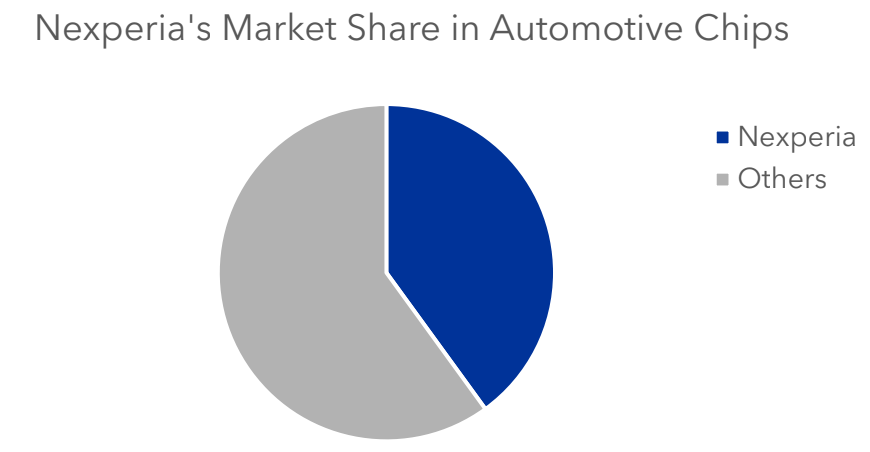
Nexperia is owned by Wingtech Technologies, a Chinese-domiciled company that was added to the BIS Entity List last year, making the subsidiary subject to export controls. TechInsights estimates Nexperia’s market share in automotive chips, which also includes transistors and diodes, to be 40%. There are other manufacturers of these inexpensive and essential products, including outside of China, although their production lines are more limited and cannot easily scale. According to the European Automobile Manufacturers Association, finding an alternative supplier would likely take months, resulting in production stoppages and steep losses for the global automotive industry.
Nexperia’s takeover by the Dutch government prevents a full transfer of operations to China, but it highlights a dilemma regarding the extent to which the EU can be economically intertwined with Chinese companies. Europe remains dependent on the Chinese market, leaving it particularly vulnerable to export restrictions on even legacy systems that remain crucial to the production of consumer goods. China is aware of Europe’s vulnerability and is increasingly willing to economically pressure the continent in pursuit of perceived quick political gains. However, China’s growing willingness to coerce Europe will likely encourage the continent to pursue additional supply chains that are not dependent on China; yet, it remains an open question whether it has the political and economic will to do so.